Datatruck Raises $12M Series A to Accelerate AI-Native TMS for Carriers
8/7/26, 10:50 PM
DTC Codes Explained What Diagnostic Trouble Codes Mean
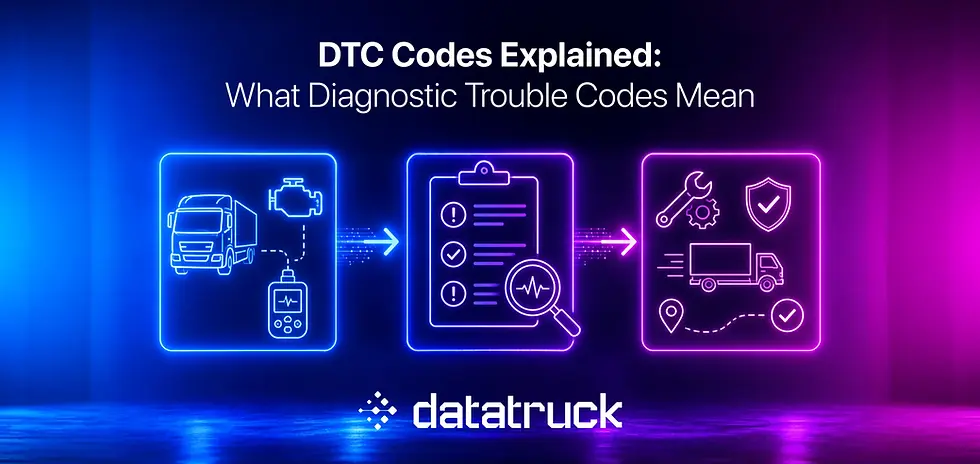
A dashboard warning light is vague, but the code behind it tells you exactly what your truck is complaining about. DTC codes, or diagnostic trouble codes, are how a truck's computer reports a fault, and reading them fast is the difference between a $200 fix and a roadside breakdown. This guide explains what DTC codes mean, how to read them, and how fleets act on them before they become downtime.
Key takeaways
|
What are DTC codes?
A diagnostic trouble code is a signal a truck's onboard computer generates when a sensor or system reads outside its expected range. The code is what triggers a dashboard warning light, and it points a technician toward the specific fault.
Without the code, a warning light just says something is wrong. With it, you know whether you are looking at an emissions sensor, a brake system, or an engine issue.
How to read a DTC code
DTC codes follow a standardized structure, so the format itself tells you a lot before you even look it up. Each position in the code carries meaning.
Position | What it indicates |
First letter | System: P powertrain, B body, C chassis, U network |
First digit | Generic standard code or manufacturer-specific |
Remaining digits | The specific fault within that system |
Heavy trucks also use J1939 codes with SPN and FMI numbers, which identify the failed component and the type of failure. Either way, the code narrows the problem before a wrench is turned.
Why DTC codes matter for fleets
For a fleet, a DTC is an early warning that can prevent a truck from going down on the road. Acting on the code while it is minor avoids the far bigger cost of a breakdown and a stranded load.
Catch a failing part before it strands a driver
Distinguish a minor sensor fault from a drive-stopping issue
Plan repairs during downtime instead of mid-route
Track recurring codes that signal a deeper problem
This is where connected fleet data earns its keep, surfacing codes the moment they appear rather than at the next inspection.
From code to action
A code is only useful if it leads to a decision. The fleets that avoid downtime have a simple routine for turning a DTC into the right next step.
Capture the code as soon as the truck reports it
Assess severity, is this drive-home or pull-over now
Schedule the repair and route the truck accordingly
Log the code and fix to spot recurring patterns
Reacting to breakdowns is one of the costliest habits in trucking, part of the waste covered in 9 ways carriers can reduce operating costs.
Connecting DTC data to your operation
DTC codes are most valuable when they reach the people making dispatch and maintenance calls, not stuck in a device. When a code appears next to the load a truck is carrying, you can decide whether to reroute before it becomes an emergency.
That requires telematics and maintenance data flowing into the same system you run operations from, the connection explained in how AI in fleet management is shaping trucking. A code that only a technician sees days later helps no one.
How Datatruck turns fault codes into planned maintenance
Datatruck is a TMS for carriers that brings telematics and vehicle data into the same database as dispatch, so a DTC surfaces alongside the truck's load and location. That lets dispatchers and maintenance act before a fault becomes downtime.
Instead of a warning light no one sees until the truck stops, you get an early signal tied to the operation. See how connected vehicle data prevents downtime with a Datatruck demo.
FAQs
What are DTC codes?
DTC codes, or diagnostic trouble codes, are signals a truck's onboard computer generates when a sensor or system reads outside its normal range. They are what trigger a dashboard warning light and point a technician to the specific fault.
How do you read a DTC code?
A DTC code starts with a letter for the affected system, P for powertrain, B for body, C for chassis, or U for network, followed by digits that pinpoint the fault. Heavy trucks also use J1939 codes with SPN and FMI numbers that identify the failed component and failure type.
Why do DTC codes matter for fleets?
DTC codes give fleets an early warning to fix a failing part before it strands a driver and a load on the road. Acting on a code while the issue is minor turns a potential breakdown into planned maintenance.
How do fleets act on DTC codes?
Fleets capture the code as soon as the truck reports it, assess how severe it is, schedule the repair, and log the code to spot recurring problems. This works best when telematics data flows into the same system dispatch and maintenance already use.